

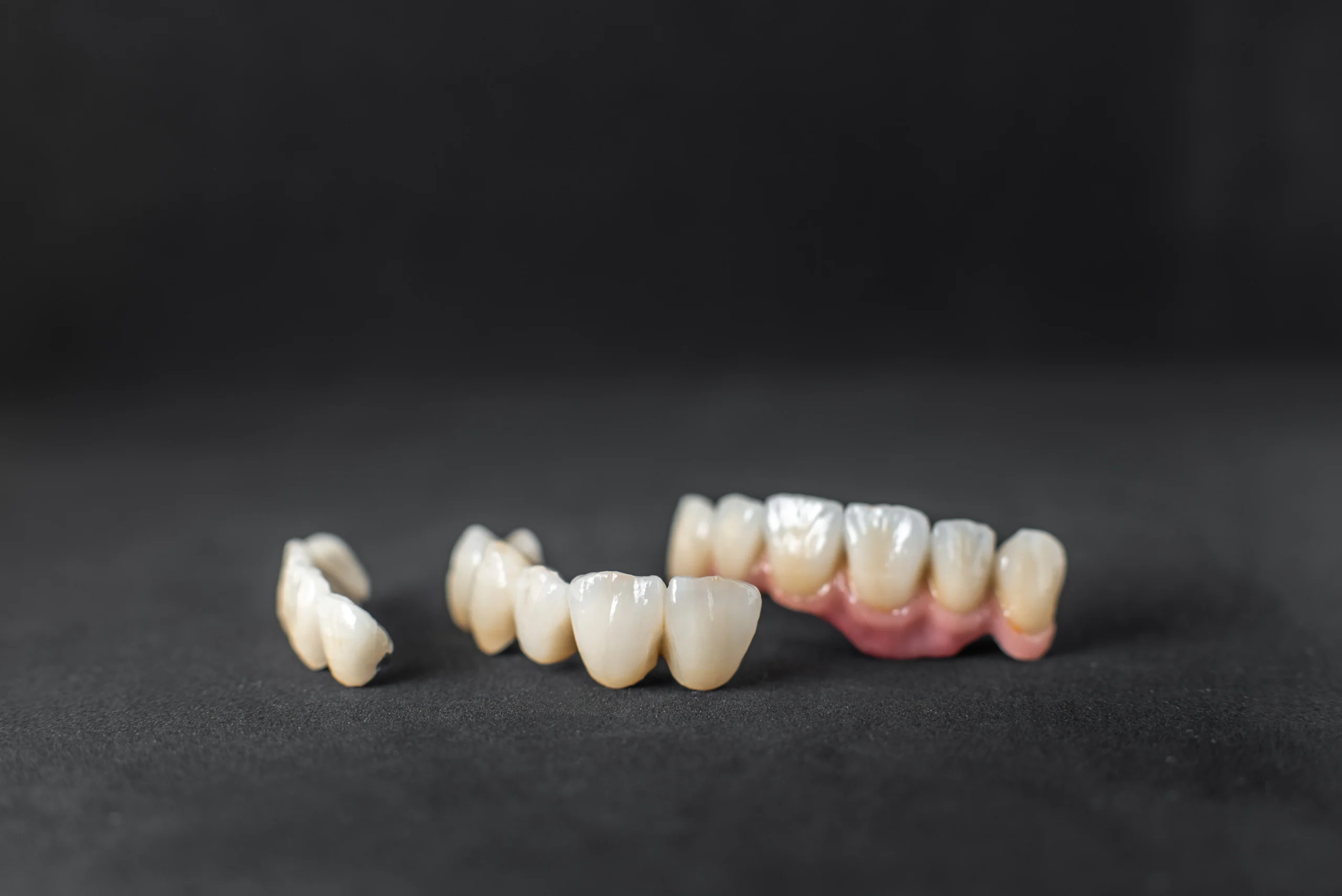
A dental crown normally feels a little strange at first. Your mouth is very sensitive, and even a slight change in shape or bite can make you feel like something is different for a day or two. Some patients have reported feeling sore or sensitive to pressure or bite changes immediately after the procedure.
Many people have wondered the same thing on the way home from a dental office in Lakeside Mall or after a busy day on Hall Road: how long does it take for a crown to settle? Knowing the adjustment period can help you to remain calm and know when to call a dentist, if required.
What Occurs in Your Mouth After the Procedure
A dental crown is installed after the tooth preparation, in which the enamel and dentin are removed to accommodate the crown. Underneath these layers is the pulp, which houses the nerves that respond to temperature and pressure. After the installation, the tooth and gum respond to the new condition.
The first few days involve fully stabilizing the dental cement holding the crown in place, reducing inflammation, and adjusting your bite. This phase is sometimes referred to as the healing time for dental crowns in Sterling Heights, even though it is not the tooth’s actual healing.
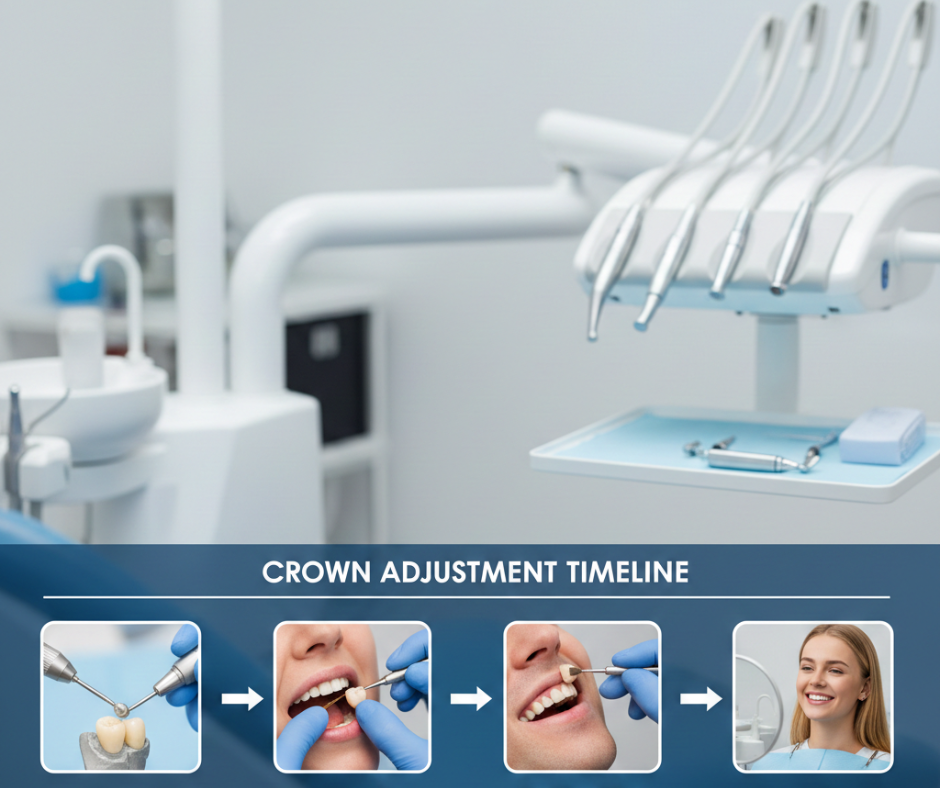
Timeline for Crown Adjustment
Each new crown requires a brief adjustment period while your bite, gums, and nerves adjust. Understanding what normally occurs day by day will help you remain reassured, aware of normal feelings, and informed of when your restoration is adjusting as expected. Here’s what the normal adjustment looks like:
First 24-48 hours
- Gum irritation or soreness
- Sensitivity to pressure from chewing
- Inflammation around the gum area
Days 3-7
- Bite soreness starts to dissipate
- Sensitivity to tooth surfaces reduces
- Chewing becomes more natural
Week 2 and beyond
- The feeling of the crown being a natural part of your tooth
- Nerve stimulation stabilizes
- Awareness of the restoration diminishes
Patients often ask how long it will take for a dental crown to settle in or feel normal. Typically, one to two weeks is all that is needed for most patients, although slight awareness may persist for a bit longer.
Why Some Crowns Take Longer to Feel Natural
Not all crowns take the same amount of time to feel natural. The type of crown material, bite alignment, and tooth sensitivity all play a role in how quickly it feels natural. These factors, along with others, help explain why some people adjust to their crowns faster than others.
- Crown material: Porcelain and ceramic crown restorations usually feel more natural. Zirconia and metal crown restorations may feel harder at first due to their density.
- Bite alignment: Even a slight misalignment can lead to pressure sensitivity. A dentist can make an occlusion adjustment to fix this.
- Tooth nerve history: Teeth that had deep decay or trauma may take longer to adjust because the pulp is more sensitive.
- Type of restoration: Porcelain-fused-to-metal crowns may require some polishing to feel more comfortable.
Temporary vs Permanent Crown Sensations
Some individuals feel a greater difference between a temporary crown and a permanent crown. This is because temporaries are made of lighter materials and intended for temporary use.
Some tips for taking care of a temporary crown include:
- Avoid sticky foods
- Chew on the opposite side
- Brush gently near gum margins
After the permanent crown is cemented, it will have a more accurate fit.
Common Sensations and What They Mean
Once the crown is in place, you may notice your mouth is sending out signals that feel unusual but are usually nothing to worry about. Learning what sensations are normal and which require attention will help you feel confident and take the right steps to ensure an easier adjustment process.
Normal sensations:
- Slight soreness from biting
- Temporary sensitivity to temperature
- Gum soreness
Sensations to watch for:
- Sharp pain from chewing
- Ongoing soreness from biting
- Inflammation that persists beyond two weeks
Discomfort could mean the crown is slightly high. This can be easily fixed by adjusting the occlusion.

Materials and Texture
The material used for your dental crown may affect its texture or feel during healing. Patients often ask how much a dental crown costs, since material and tooth condition both affect the final restoration choice. Texture, density, and thickness are all factors in determining the feel of your dental crown, which is why some dental crowns may feel natural in a short while, while others may take longer.
- Ceramic dental crown: This type of crown has a smooth texture and blends well with natural teeth
- Zirconia dental crown: This crown is very strong and may feel firm at first
- Metal dental crown: This crown is thin and very strong
- Porcelain-fused-to-metal dental crown: This crown is strong and aesthetic
The healing time for dental crowns varies from one individual to another, depending on how the material used interacts with the surrounding teeth.
Everyday Habits That Impact Adjustment
Everyday activities in the Sterling Heights area, such as drinking hot coffee on a chilly Michigan morning or munching crunchy snacks at Dodge Park, may impact tooth sensitivity in the first week.
Habits that assist your crown in settling well:
- Chew on both sides
- Do not clench your teeth
- Brush gently along the gum line
- Rinse with lukewarm water
These habits decrease nerve stimulation and help in quick adjustment.
When to Call a Dentist
Most crown adjustments go smoothly, but some signs should not be overlooked. Being aware of when pain is not normal can help you seek immediate care and avoid complications, ensuring your crown works properly.
- Pain that gets worse rather than better
- Sensitivity to pressure that persists for more than two weeks
- Loose crown
- Gum irritation that gets worse
These signs may indicate a bite imbalance, dental cement issues, or irritation under the crown. Early evaluation prevents complications.
Your Next Steps After Crown Placement
The step-by-step dental crown procedure ensures the final result is an exact replica of your bite, shape, and teeth, helping expedite the adjustment period. The adjustment to a new restoration takes a brief period of time and is not a long-term issue. Your body is just adjusting to the new restoration. For most patients, the adjustment to a new dental crown is automatic and occurs within a few days.
If you are still facing discomfort after the adjustment period, a visit to Diamond Family Dental of Sterling Heights will allow a dentist to evaluate the crown’s alignment, gum condition, and fit. A slight adjustment will return the restoration to feeling completely natural.
Questions People Ask About Dental Crowns
How long does crown sensitivity last after placement?
Sensitivity usually fades within one to two weeks. During this time, nerves inside the tooth respond to changes in temperature and pressure. If sensitivity persists beyond that period or worsens during biting, it may signal bite imbalance or irritation that warrants evaluation.
Is it normal for a crown to feel strange at first?
Yes. A crown changes the shape and surface of your tooth, so your bite and tongue need time to adjust. Most patients stop noticing the crown within days as muscles adapt and the brain recalibrates how teeth meet.
What should I do if my bite feels uneven?
Avoid chewing hard foods and contact a dentist promptly. A minor occlusion adjustment can smooth the biting surface and restore balance. Waiting too long may lead to jaw soreness or uneven pressure on surrounding teeth.
Can gum soreness happen around a new crown?
Yes, mild gum tenderness is common for a few days. The gum tissue may react to the procedure or dental cement. Gentle brushing and warm saltwater rinses usually quickly calm irritation. Persistent swelling, however, should be evaluated.
Why does my crown feel sensitive to cold drinks?
Cold sensitivity occurs because dentin layers beneath the crown can still transmit temperature signals. This usually settles as the pulp adjusts. Using a toothpaste designed for sensitivity can help reduce nerve response while your tooth stabilizes.
How long should I wait before eating normally?
Most people can return to normal eating within 24 hours once the cement sets. Start with softer foods and chew slowly. Gradually reintroduce crunchy or chewy items as comfort improves and your bite feels stable and balanced.